
Introduction
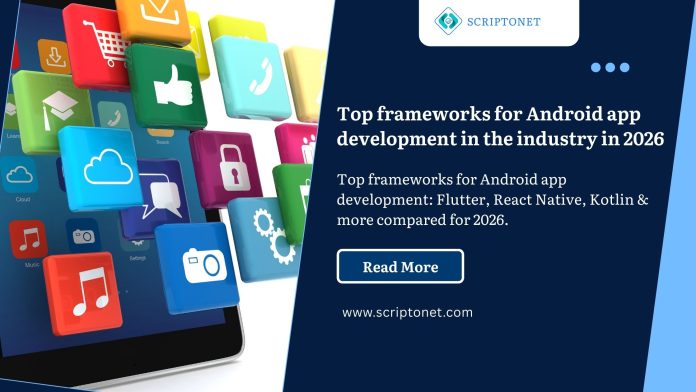
The Android ecosystem continues to evolve at a rapid pace, offering developers an impressive array of tools to build powerful mobile applications. Choosing the right frameworks for Android app development has become more critical than ever as businesses compete for user attention in an increasingly crowded marketplace. Whether you’re a seasoned developer or just starting your journey in mobile development, understanding which framework aligns with your project requirements can make the difference between a successful app & one that struggles to gain traction.
This journal explores the leading frameworks for Android app development that dominate the industry in 2026. We’ll examine their strengths, limitations & practical applications to help you make informed decisions for your next project.
Native android development with Kotlin
Kotlin has solidified its position as the preferred language for native Android development since Google declared it as the official language in 2019. The modern syntax & enhanced safety features make Kotlin an attractive choice for developers who want to build robust applications.
Native development offers unparalleled performance & access to the latest Android features. When you use Kotlin with Android Studio, you gain direct access to all platform-specific APIs without any intermediate layers. This direct relationship with the operating system translates to faster execution & better resource management.
The main limitation of native development lies in its platform specificity. If you need to deploy your application on iOS or other platforms, you’ll need to maintain separate codebases. This approach requires more resources but delivers the best possible user experience for Android users.
Flutter: Google’s cross-platform solution
Flutter has emerged as one of the most popular frameworks for Android app development, offering developers the ability to create beautiful applications for multiple platforms from a single codebase. Built by Google, Flutter uses the Dart programming language & provides a rich set of pre-designed widgets that follow Material Design guidelines.
The framework’s hot reload feature allows developers to see changes instantly without restarting the application. This capability significantly speeds up the development process & makes experimentation more accessible. Flutter compiles to native code, which means apps built with this framework perform nearly as well as those developed using native tools.
However, Flutter apps tend to have larger file sizes compared to native applications. The framework also has a smaller community compared to more established options, though this gap is closing rapidly.
React Native: Facebook’s JavaScript framework
React Native remains one of the most widely adopted frameworks for Android app development in 2026. It allows developers familiar with JavaScript and React to build mobile applications using their existing skills. This framework bridges the gap between web and mobile development, making it easier for teams to share resources across platforms.
The component-based architecture promotes code reusability & maintainability. Developers can write once & deploy to both Android & iOS, though platform-specific adjustments are sometimes necessary. The vast ecosystem of third-party libraries & plugins extends React Native’s capabilities significantly.
For really complicated or graphically demanding applications, performance may be an issue. React Native uses a JavaScript bridge to communicate with native components, which can introduce latency in certain scenarios.
Jetpack Compose: Modern UI toolkit
Jetpack Compose represents a paradigm shift in how developers build user interfaces for Android applications. This modern toolkit from Google allows developers to create UI components using declarative programming principles, similar to how Flutter & React work.
Compose simplifies the process of building complex interfaces by eliminating the need for XML layouts. Everything happens in Kotlin code, which reduces context switching and makes the development experience more cohesive. The toolkit integrates seamlessly with existing Android views, allowing gradual adoption in legacy projects.
As a relatively newer addition to the frameworks for Android app development landscape, Jetpack Compose is still maturing. Some third-party libraries haven’t fully adopted Compose yet, which might require developers to use traditional view-based approaches for certain features. The official documentation provides comprehensive guidance for developers transitioning to this modern approach.
Xamarin: Microsoft’s .NET framework
Xamarin enables developers to build Android applications using C# & the .NET framework. This approach appeals particularly to development teams already invested in the Microsoft ecosystem. Xamarin provides near-native performance by compiling to native code rather than relying on interpreted languages.
The framework offers two (2) development approaches: Xamarin. Forms for cross-platform UI development and Xamarin. Android for platform-specific implementations. This flexibility allows teams to choose the right balance between code sharing & native capabilities based on their project requirements.
The learning curve of the.NET ecosystem is the primary disadvantage of Xamarin. The framework also tends to produce larger application packages compared to native development. However, for organizations already using .NET for backend services, Xamarin provides an efficient path to mobile development without requiring teams to learn entirely new languages.
Ionic: Web technologies for mobile
Ionic takes a different approach among frameworks for Android app development by leveraging web technologies like HTML, CSS & JavaScript. Applications built with Ionic run inside a web view, wrapped in a native container that provides access to device features.
This approach allows web developers to transition into mobile development with minimal new learning. Ionic offers a rich library of pre-built UI components that work across platforms, significantly speeding up development time. The framework integrates well with popular web frameworks like Angular, React and Vue.
The web view approach means Ionic applications typically don’t match the performance of native or compiled cross-platform solutions. Complex animations or graphics-intensive features might feel less responsive. Nevertheless, for content-driven applications or internal enterprise tools, Ionic provides a cost-effective development path.
Cordova: The pioneer of hybrid development
Apache Cordova laid the groundwork for hybrid mobile development long before many current frameworks existed. It allows developers to package web applications as mobile apps using a single codebase. Cordova relies on plugins to access native device features like cameras, GPS & sensors.
While newer frameworks have gained more attention, Cordova remains relevant for certain use cases. Its maturity means a vast ecosystem of plugins & community support. Teams with strong web development skills but limited mobile expertise can leverage Cordova to quickly deploy applications.
Performance limitations and dated UI patterns represent the main challenges with Cordova. Modern alternatives often provide better performance & more native-feeling interfaces. However, for simple applications or prototypes, Cordova still offers a viable path to market.
NativeScript: Direct native API access
NativeScript distinguishes itself among frameworks for Android app development through its direct access to native APIs. Unlike frameworks that use bridges or web views, NativeScript provides JavaScript access to all platform APIs without any wrappers.
Developers can choose to build applications using Angular, Vue or plain JavaScript. This flexibility makes NativeScript accessible to developers from various backgrounds. The framework renders truly native UI components rather than emulating native appearance, resulting in authentic platform experiences.
The smaller community compared to React Native or Flutter can make finding solutions to uncommon problems more challenging. Documentation and third-party resources are growing but remain less comprehensive than more popular alternatives. Organizations requiring maximum performance with cross-platform code sharing often find NativeScript an attractive option.
Choosing the right framework for your project
Selecting from the available frameworks for Android app development requires careful consideration of multiple factors. Team expertise plays a crucial role, leveraging existing skills can significantly reduce development time & costs. If your team excels in JavaScript, React Native or Ionic might be natural choices. Teams comfortable with modern programming languages might prefer Flutter or Kotlin.
Performance requirements influence framework selection substantially. Graphics-intensive applications, real-time games or apps requiring complex animations typically benefit from native development or compiled cross-platform solutions like Flutter. Content-driven applications or business tools often work well with hybrid frameworks.
Budget & timeline constraints also impact decisions. Cross-platform frameworks can reduce development costs when targeting multiple platforms. However, they might require additional optimization work to achieve desired performance levels.
Practical considerations & trade-offs
Every framework involves compromises between different priorities. Native development delivers optimal performance but requires maintaining separate codebases for different platforms. Cross-platform frameworks reduce code duplication but might introduce performance overhead or limit access to platform-specific features.
Community support & ecosystem maturity shouldn’t be overlooked. Popular frameworks benefit from extensive documentation, abundant learning resources & active communities ready to help solve problems. Smaller communities might offer more specialized expertise but fewer general resources.
Long-term maintenance deserves consideration when evaluating frameworks for Android app development. Some frameworks receive regular updates & improvements, while others might face uncertain futures. Google’s backing of Flutter & Jetpack Compose suggests long-term support, while community-driven projects depend on sustained contributor interest.
Integration with existing systems
Modern applications rarely exist in isolation. They need to integrate with backend services, third-party APIs & existing enterprise systems. Most frameworks for Android app development provide robust networking capabilities & support for popular integration patterns.
RESTful API consumption works well across all major frameworks. GraphQL support has become increasingly common, with libraries available for most platforms. Authentication & authorization mechanisms integrate relatively easily, though implementation details vary by framework.
Some frameworks offer advantages for specific integration scenarios. Xamarin provides excellent integration with Microsoft services & Active Directory. React Native works well with Node.js backends. Evaluating your existing infrastructure can guide framework selection toward options that simplify integration work.
Testing & quality assurance
Robust testing capabilities distinguish professional frameworks for Android app development from amateur solutions. Native Android development benefits from mature testing frameworks like Espresso and JUnit. Flutter includes comprehensive testing tools built into the framework itself.
Cross-platform frameworks face unique testing challenges. Developers must verify behavior across different platforms & device configurations. Automated testing helps manage this complexity, though setting up comprehensive test suites requires significant effort.
The testing ecosystem around each framework varies considerably. Popular frameworks benefit from numerous testing libraries, continuous integration tools and cloud-based testing services. The Firebase Test Lab provides device testing capabilities that work with multiple frameworks.
Conclusion
The landscape of frameworks for Android app development in 2026 offers unprecedented choice & capability. Native development with Kotlin provides maximum performance and platform integration. Flutter delivers beautiful, performant cross-platform applications with a modern development experience. React Native leverages JavaScript expertise for efficient multi-platform development.
Emerging tools like Jetpack Compose are reshaping how developers approach UI development, while established frameworks like Xamarin continue serving organizations invested in the Microsoft ecosystem. Your choice should align with your team’s skills, project requirements and long-term maintenance considerations.
The diversity of available frameworks for Android app development means there’s rarely a single correct answer. Successful developers evaluate options carefully, consider project-specific requirements & make informed decisions based on clear priorities rather than following trends blindly.
Key Takeaways
- Understanding the strengths and limitations of different frameworks for Android app development empowers you to make better technical decisions. Native development remains the gold standard for performance-critical applications, while cross-platform frameworks offer compelling advantages for multi-platform projects.
- Consider your team’s existing expertise when evaluating options. Leveraging familiar technologies reduces learning curves & accelerates development. However, don’t shy away from exploring new frameworks when they offer significant advantages for your specific use case.
- Remember that framework selection represents just one (1) factor in application success. Good architecture, thoughtful design & rigorous testing matter more than the specific tools you choose. The best framework is the one that helps your team build excellent applications efficiently.
Frequently Asked Questions (FAQ)
What are the most popular frameworks for android app development in 2026?
The leading frameworks include Flutter for cross-platform development with excellent performance, React Native for JavaScript developers seeking multi-platform capabilities & Kotlin for native Android development. Jetpack Compose has gained significant traction as Google’s modern UI toolkit. Each framework serves different needs, so popularity often depends on specific use cases and development team expertise.
How do frameworks for android app development compare in terms of performance?
Native development with Kotlin typically delivers the best performance by providing direct access to platform APIs without intermediate layers. Flutter compiles to native code and performs nearly as well as native solutions. React Native uses a JavaScript bridge that can introduce slight overhead. Hybrid frameworks like Ionic and Cordova generally show the most noticeable performance differences compared to native development.
Which frameworks for android app development suit enterprise applications?
Many frameworks prove highly suitable for enterprise applications. Flutter, React Native & Xamarin power numerous large-scale enterprise apps successfully deployed worldwide. Native development remains preferred when maximum performance or deep platform integration is critical. Enterprise framework selection should consider factors like long-term support, security features, integration capabilities & available developer talent.