
Introduction
Apps run our lives these days, but most people don’t realize that behind every good one is a team that had to pick the right building blocks & that decision can make or break how fast they can build it & how well it actually works.
Frameworks for app development serve as the foundation that developers build upon. They provide pre-written code, tools & libraries that streamline the development process. Understanding these frameworks helps businesses & developers make informed decisions that align with their goals & resources.
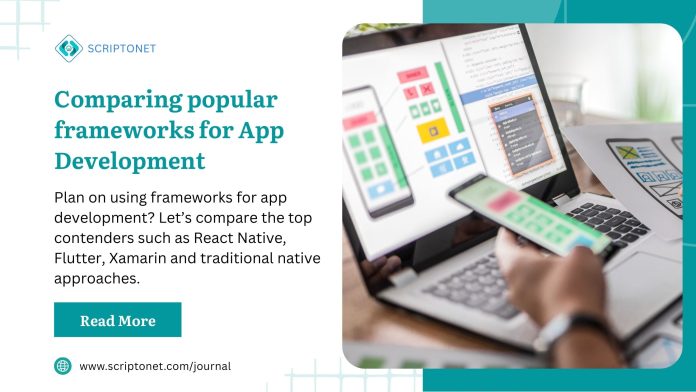
We’ll break down the top frameworks that developers are actually using to build the apps you love. We’ll explore their strengths, weaknesses & ideal use cases to help you navigate this important decision.
Understanding App Development frameworks
What are development frameworks?
Development frameworks are structured platforms that provide developers with essential tools & guidelines. They come loaded with ready-made pieces, code libraries & proven ways of doing things so you don’t have to reinvent the wheel every time.
Think of frameworks as architectural blueprints for building houses. Just as blueprints provide structure & guidance for construction, frameworks for app development offer the foundation & tools needed to create applications efficiently.
Types of development approaches
App development typically follows three (3) main approaches:
- Native development builds apps that are particular to one (1) platform and use platform-specific languages. iOS apps are written in Swift or Objective-C, while Android apps are written in Java or Kotlin.
- Cross-platform development lets you write your code once & run it everywhere – no need to build separate versions for iPhone & Android. This strategy employs frameworks to convert code into platform-specific applications.
- Hybrid development combines web technologies with native containers. These apps run within a native wrapper but use web technologies for the user interface.
Popular native development frameworks
IOS Development with Swift & Objective-C
Apple’s native frameworks for app development provide direct access to iOS features & optimal performance. Swift, launched in 2014, has new syntax and safety features that improve development efficiency.
Building directly for iPhone gives you the smoothest performance & taps into all of Apple’s features without any compromises. Apps built with native frameworks access all device features without limitations.
The downside is you’re basically building two completely different apps if you want to cover both iPhone & Android. This approach demands more time & resources but delivers the best user experience for each platform.
Android development with Java & Kotlin
Google’s Android platform allows for native development in Java and Kotlin. Google gave Kotlin its official blessing back in 2017 & it’s got cleaner code, plus it plays nicely with all the Java stuff that’s already out there.
Android’s native frameworks for app development provide excellent performance & full access to Google services.
The primary disadvantage is having to maintain distinct codebases for each platform. Teams need specialized knowledge for each platform, increasing development complexity & cost.
Leading cross-platform frameworks
React Native: Facebook’s solution
React Native emerged as one of the most popular frameworks for app development. Created by Facebook, it allows developers to use JavaScript & React principles to build mobile applications.
It takes your JavaScript & turns it into real native pieces that run almost as fast as if you’d built them from scratch. Major companies like Instagram, Airbnb & Uber have successfully used React Native for their mobile applications.
React Native’s biggest win is letting you reuse chunks of code & pump out updates way faster than traditional methods. If you already know React, jumping into mobile development feels pretty natural. The framework also supports hot reloading, allowing developers to see changes instantly.
However, React Native faces limitations with complex animations & platform-specific features. Some programs require native modules for advanced functionality, complicating development.
Flutter: Google’s modern approach
Flutter represents Google’s answer to cross-platform development challenges. It runs on Dart & compiles straight to native code, so you get that snappy performance no matter which platform you’re targeting.
Flutter’s unique approach renders everything using its own graphics engine. This ensures consistent appearance & behaviour across different devices & operating systems. The framework is also relatively new, meaning fewer third-party packages are available.
Xamarin: Microsoft’s enterprise solution
Xamarin lets you use C# & .NET to build apps that work on both iPhone & Android without starting from scratch twice. Microsoft’s framework allows extensive code sharing while maintaining native performance.
The platform integrates seamlessly with Microsoft’s development ecosystem, including Visual Studio & Azure cloud services. Enterprise organizations often prefer Xamarin for its robust tooling & support.
Developers can access platform-specific APIs while sharing business logic across platforms.
However, Xamarin applications tend to be larger in size compared to other frameworks for app development. The framework also requires Visual Studio licensing for commercial development.
Hybrid development options
Ionic: Web technologies for mobile
Ionic bridges the gap between web & mobile development by using HTML, CSS & JavaScript. It takes your web app & packages it up like a native app so you can actually put it in the App Store or Google Play.
This method appeals to web developers who wish to use their existing expertise for mobile development. Ionic gives you a ton of ready-made interface pieces that look & feel just like the real native stuff on each platform.
The framework offers rapid development & easy maintenance. Teams can use familiar web technologies & frameworks like Angular, React or Vue.js with Ionic.
However, hybrid applications often suffer from performance limitations compared to native solutions. Complex animations and lengthy operations may not run as smoothly as their native counterparts.
Cordova/PhoneGap: The pioneer
Apache Cordova (which used to be called PhoneGap) basically invented the whole idea of building one app that works everywhere. It allows web applications to access device features through JavaScript APIs.
Cordova hooks you up with plugins to tap into all the phone’s good stuff, such as camera, location, contacts, you name it. The framework supports multiple platforms & has a large ecosystem of plugins.
While Cordova opened the door for hybrid development, it faces performance challenges with modern application requirements. Newer frameworks for app development have largely superseded Cordova for most use cases.
Choosing the right framework
Performance considerations
Performance requirements significantly influence framework selection. Native development delivers the best performance but requires more resources. Cross-platform solutions provide superior performance and shorter development cycles.
Consider your application’s complexity & performance needs. Simple applications work well with cross-platform frameworks, while performance-critical apps benefit from native development.
Development team skills
Your team’s existing skills play a crucial role in framework selection. Teams with web development knowledge might prefer React Native or Ionic. Those familiar with Microsoft technologies might choose Xamarin.
Consider the learning curve & available talent in your region. The big-name frameworks usually have tons of people using them, which means it’s way easier to find developers who know their way around & can help when you’re stuck.
Budget & timeline constraints
Cross-platform frameworks can slash your development time & budget since you’re writing code once instead of building everything twice. However, they may require additional optimization for platform-specific features.
Native development demands a larger initial investment but may result in lower long-term maintenance expenses. Think about what it’ll cost you, not just to build the thing, but to keep it running & updated down the road.
Target audience & platforms
Understanding your target audience helps determine platform priorities. If your users primarily utilize iOS devices, native iOS programming may be the best alternative. Cross-platform frameworks offer advantages in terms of extended reach.
Consider platform-specific design guidelines & user expectations. Some frameworks for app development handle platform differences better than others.
Comparing framework capabilities
User Interface & Experience (UI/UX)
Native frameworks provide the most authentic user experience by following platform-specific design guidelines. Users expect familiar interactions & visual elements on their preferred platforms.
Some cross-platform tools are great at making apps feel like they belong on each device, while others… not so much. Flutter excels in creating custom designs, while React Native focuses on native component mapping.
Development speed & efficiency
Frameworks for app development significantly impact development speed. Cross-platform solutions enable faster initial development through code reuse, while native development may require more time for multiple platforms.
Think about how much of a pain it’ll be to keep your app updated & bug-free years down the line, not just how fast you can build it today. Some frameworks require more effort to maintain platform compatibility over time.
Access to device features
Building native gives you the keys to everything your device can do, including brand-new features as soon as they drop, while cross-platform tools sometimes make you wait or miss out on certain capabilities entirely.
Figure out what your app actually needs to do, like accessing the camera, using phone sensors, handling payments or tapping into special platform features, before you pick your tools. Some frameworks handle these requirements better than others.
Common challenges & limitations
Platform fragmentation
Every phone is different. Different sizes, different versions, different quirks & that creates headaches for any framework you choose when it comes to testing everything & making sure it works the same for everyone.
Native development handles fragmentation best by using platform-specific solutions. Cross-platform frameworks must balance consistency with platform optimization.
Maintenance & updates
Keeping applications updated across platforms requires ongoing effort regardless of the chosen framework. Platform updates, security patches & new features demand continuous attention.
Consider the long-term maintenance implications of your framework choice. Some solutions require more effort to maintain compatibility with evolving platforms.
Performance optimization
All frameworks face performance challenges in different scenarios. Understanding these limitations helps set realistic expectations & plan appropriate solutions.
Native development offers the most optimization options, while cross-platform frameworks may require creative solutions for performance-critical features.
Making the final decision
Evaluating your requirements
Start by clearly defining your application requirements, target audience & technical constraints. This foundation guides framework selection & prevents costly changes later.
Consider factors like development timeline, budget, team skills & long-term maintenance needs. Different frameworks for app development excel in different scenarios.
Prototyping & testing
Consider creating prototypes with different frameworks to evaluate their suitability for your specific needs. This hands-on approach reveals potential challenges & benefits.
Test frameworks with your team to assess learning curves & development efficiency. Actually building & testing stuff in the wild teaches you things that all the comparison charts & specs in the world never could.
Conclusion
Choosing the ideal framework for app development needs a thorough review of several aspects. Going native gives you the best speed & deepest platform connection, but you’ll need more time, money & developers to pull it off. Cross-platform solutions provide efficiency & code reuse with some performance trade-offs.
React Native suits teams with JavaScript experience & requirements for rapid development. Flutter appeals to projects needing custom designs & consistent cross-platform experiences. Xamarin works well for enterprise environments with Microsoft technology stacks.
The best choice depends on your specific requirements, team capabilities & project constraints. Consider performance needs, development timeline, budget & long-term maintenance when making this crucial decision.
Key Takeaways
- Understanding various frameworks for app development enables you to make informed decisions that are in line with project goals. Native development provides the best performance & platform integration, while cross-platform frameworks offer development efficiency & code reuse.
- Evaluate your team’s skills, project requirements & budget constraints before choosing a framework. Consider both development & maintenance costs over the application’s lifetime.
- The mobile development world never stops changing, with frameworks getting better all the time. Keep tabs on what’s coming down the pipeline, but lean on the reliable workhorses when you’re building something that can’t afford to break.
Frequently Asked Questions (FAQ)
Which frameworks for app development offer the best performance?
Native frameworks provide the best performance by accessing platform-specific optimizations directly. Flutter offers excellent cross-platform performance through its compiled approach, while React Native provides good performance for most applications through native component mapping.
Can frameworks help to minimize app development costs?
Cross-platform frameworks can considerably cut development costs by allowing code to be reused across multiple platforms. However, consider long-term maintenance costs & potential performance optimization expenses when calculating total project costs.
How do I choose between native & cross-platform frameworks for app development?
Choose native development for performance-critical applications or when you need access to cutting-edge platform features. Select cross-platform frameworks when you need to support multiple platforms quickly or have limited development resources.
What roadblocks might you hit when using cross-platform frameworks to build apps?
Cross-platform tools can struggle with really demanding apps; you might have to wait longer for new features & getting that authentic iPhone vs. Android look & feel can be tricky. Plus, you’ll need to put in extra work tweaking things to look right on everything from tiny phones to massive tablets.